Computational Biomechanics & Model V&V

I work across biomechanical model development and verification & validation, combining computational and experimental approaches to establish credible medical simulation.

Siril Dukkipati

Researcher & engineer

MDsim · Luxembourg

Black-and-white portrait of Siril Dukkipati
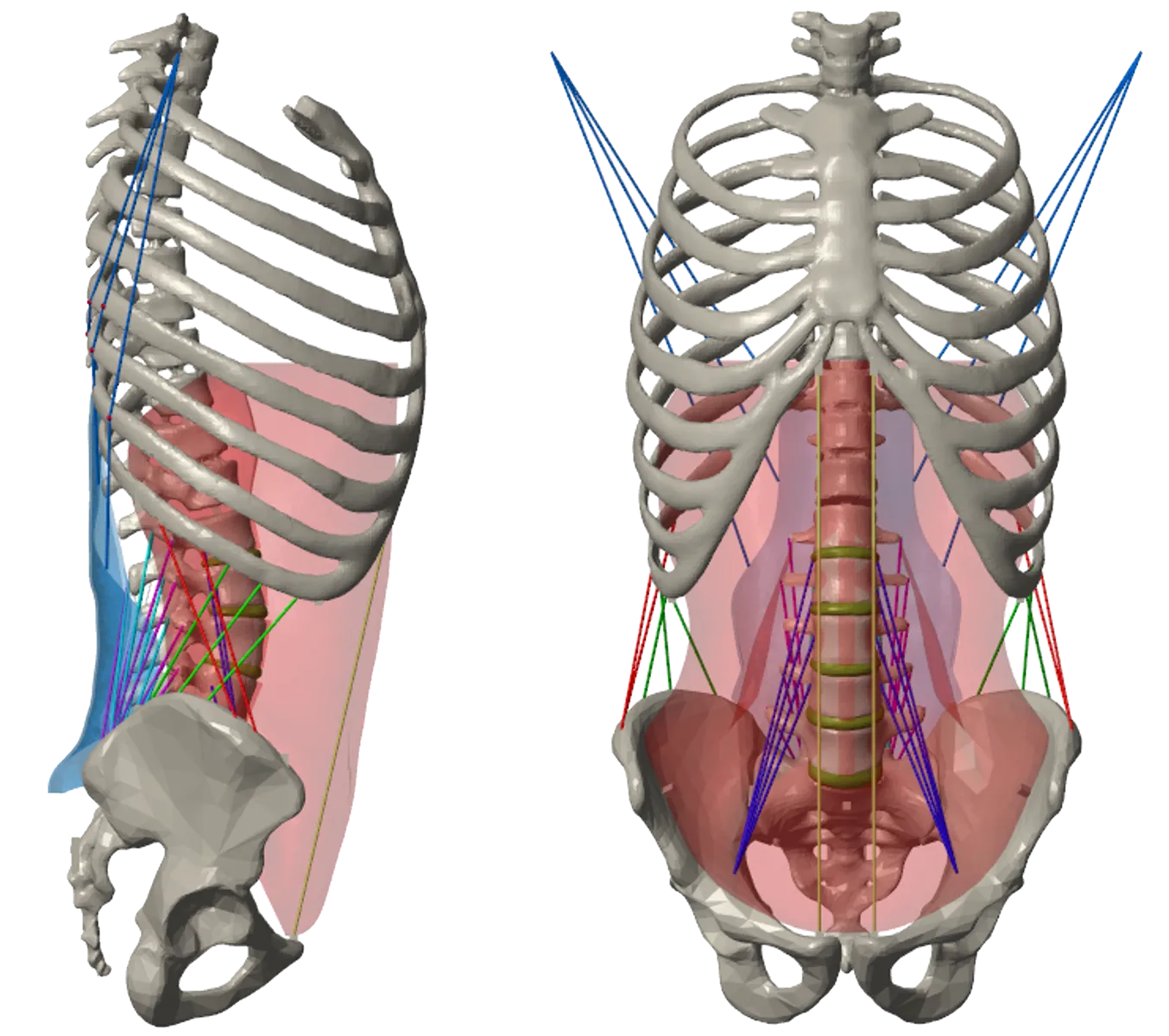
Rigid-flexible body dynamics model of the spine and torso — sagittal and frontal views with ribcage, pelvis, abdominal volume, and muscle lines

Rigid–flexible body model of the spine and torso · doctoral research, McGill University

01/Current Work

Credible models for medical simulation.

Postdoctoral researcher at MDsim S.A., Luxembourg, working on biomechanical model verification and clinical validation.

01

Model Development

Computational biomechanical model development — rigid-body, rigid-flexible, and patient-specific spine modelling.

02

Verification & Validation

Establishing model credibility through code and solution verification, and validation against experimental evidence.

03

Experimental / Clinical Evidence

Biomechanical testing, ex-vivo studies, retrospective clinical data, and standardized testing protocols.

04

Medical Simulation

The broader application context: regulatory-grade computer modelling and simulation for spine care.

02/What I Work On

Research focus.

01

Computational Biomechanics

Finite element modelling, rigid-body dynamics, rigid-flexible body dynamics, musculoskeletal modelling, and computational simulation of the spine and torso.

02

Experimental Biomechanics

Physical surrogate models, mechanical testing, robotic benchtop systems, biomechanical characterization, and standardized testing protocols.

03

Verification & Validation

Model verification, validation, and credibility — connecting experimental and clinical evidence to regulatory-oriented computer modelling and simulation.

Computational ↔ Experimental ↔ V&V

From models to evidence.

03/Selected Work

Selected work.

Physical models, computational models, and the studies that connect them.

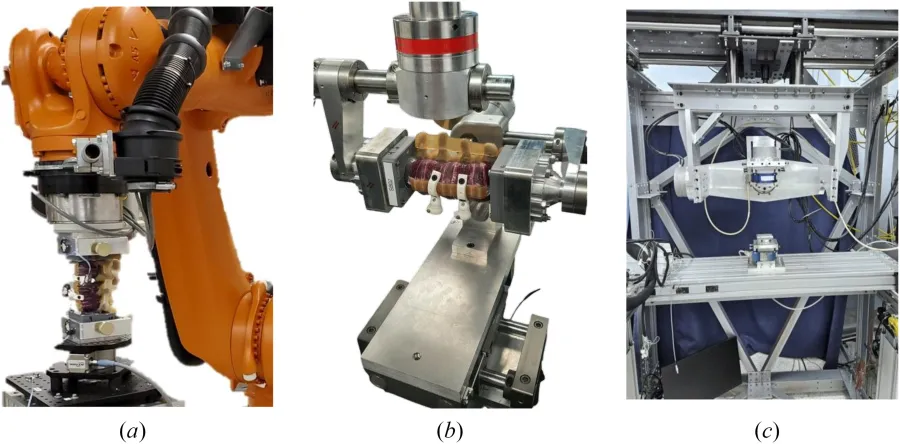
Research figure: 3D-Printed Analogue Spine Models

3.1 / 10 related publications

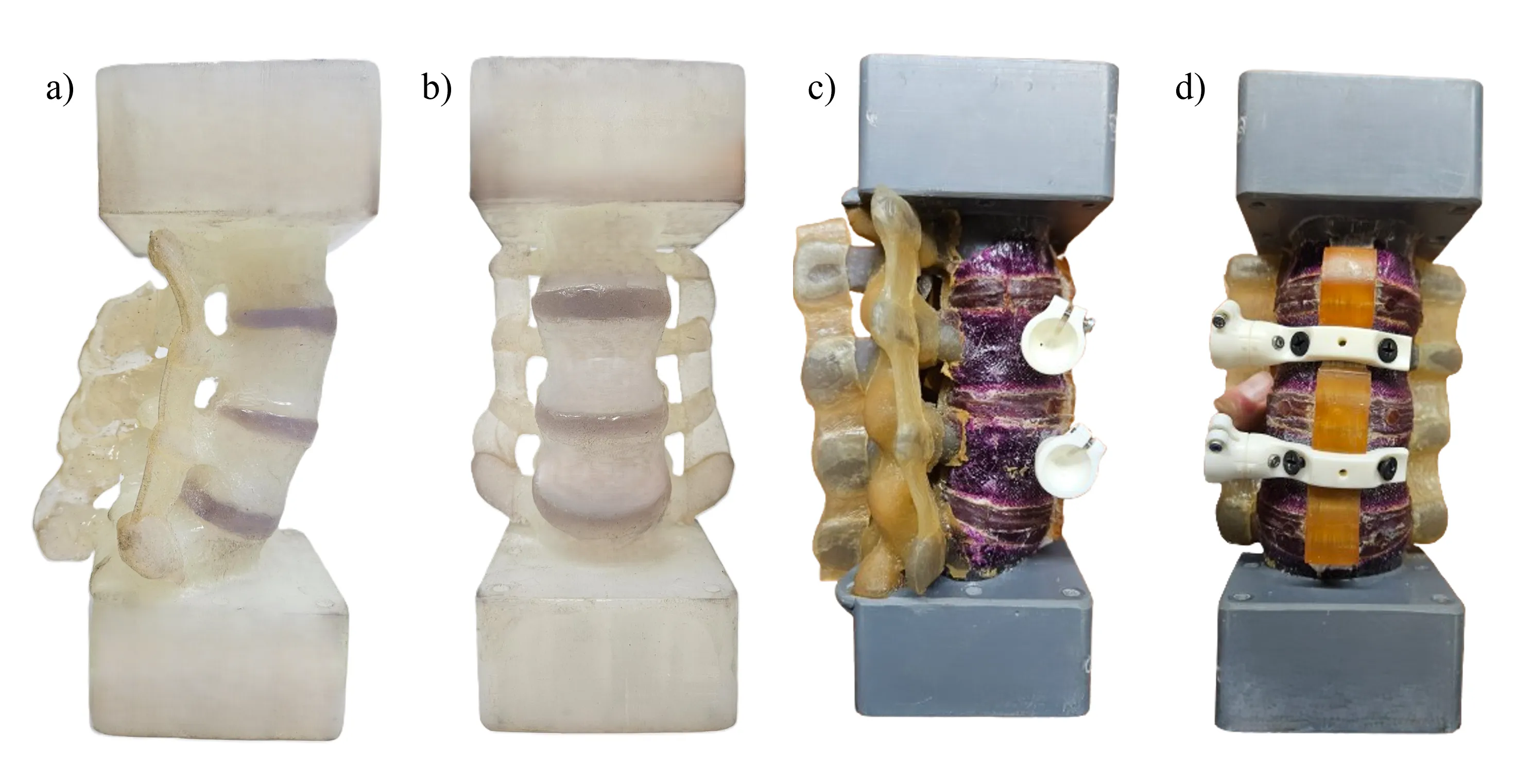
3D-Printed Analogue Spine Models

A family of fully 3D-printable lumbar spine surrogates — vertebrae, discs, and ligaments — designed as reproducible, cost-effective alternatives to cadaveric tissue for biomechanical testing.

  • additive manufacturing
  • spine surrogates
  • pure moment testing
  • ligament mechanics
View the work
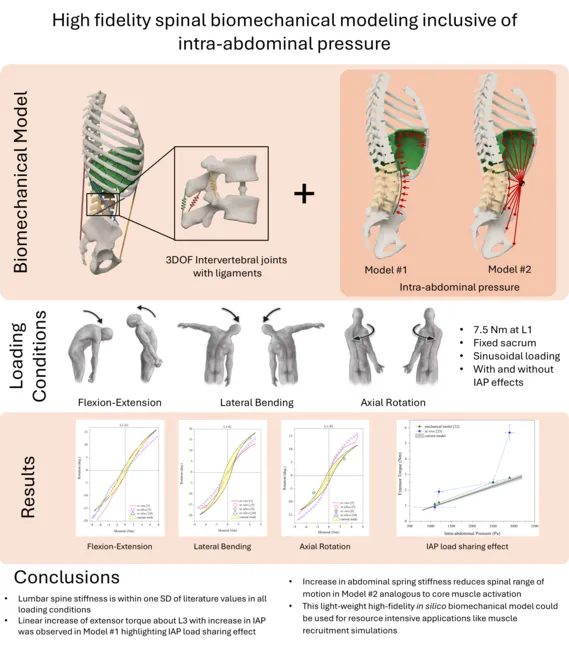
Research figure: Fast-Solving Rigid Body Spine Model with Intra-Abdominal Pressure

3.2 / 3 related publications

Fast-Solving Rigid Body Spine Model with Intra-Abdominal Pressure

A high-fidelity MATLAB rigid-body model of the lumbar spine inclusive of intra-abdominal pressure — 15 DOF, 279 force elements, ~1.4 s solve times — validated against in vivo data.

  • rigid body dynamics
  • intra-abdominal pressure
  • MATLAB
  • muscle recruitment
View the work
Research figure: Inter-Laboratory Standardization of Spine Testing

3.3 / 9 related publications

Inter-Laboratory Standardization of Spine Testing

Multi-institution studies quantifying how reproducibly different laboratories test identical spine surrogates — foundational evidence for standardized, regulatorily credible spine biomechanics.

  • reproducibility
  • multi-laboratory studies
  • test protocols
  • preclinical evidence
View the work
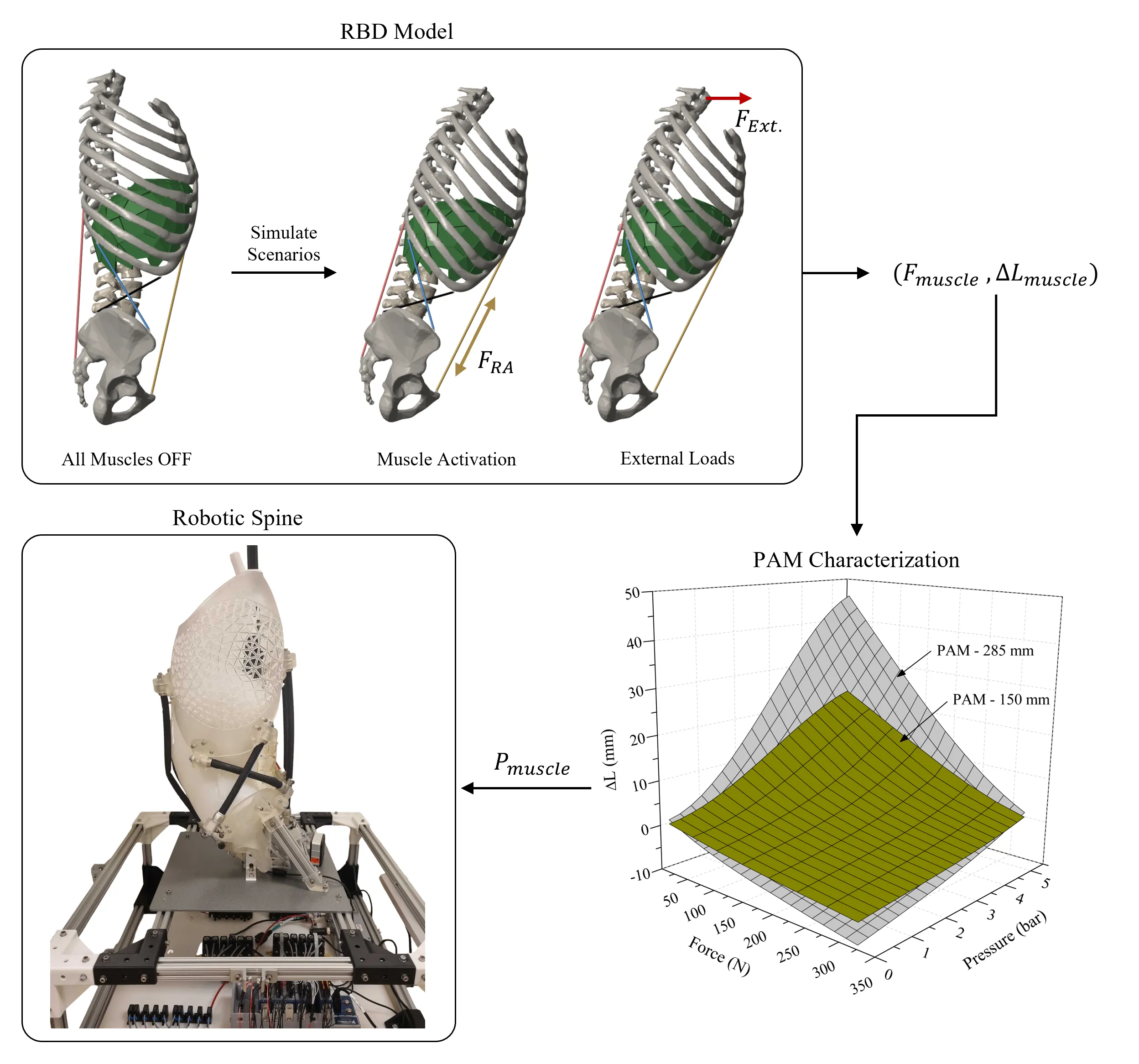
Research figure: Toward a Robotic Spine Simulator

3.4 / 3 related publications

Toward a Robotic Spine Simulator

The doctoral thesis capstone: physical surrogates, robotic testing, and computational models unified into one validation ecosystem — now extended toward clinical-grade medical simulation.

  • model credibility
  • verification & validation
  • translational research
  • medical simulation
View the work

04/Selected Publications

Representative publications.

Black-and-white portrait of Siril Dukkipati

05/About

Biography.

I am a postdoctoral researcher at MDsim S.A. in Luxembourg, working on the biomechanical verification and clinical validation of SPINEsim, a patient-specific digital twin platform for spine surgical planning. The position is funded by the FNR in collaboration with the Institute of Orthopaedic Research and Biomechanics at the University of Ulm.

I hold a PhD in Mechanical Engineering (Biomechanics) from McGill University, where I developed robotic benchtop testing, 3D-printable spine surrogates, and computational spine models.